When you think about heart health, what comes to mind? Probably exercise, managing cholesterol, watching your blood pressure, maybe cutting back on saturated fats. But here’s something that might not be on your radar: the health of your gums.
It sounds bizarre at first. What could your mouth possibly have to do with your heart? But researchers have been uncovering a fascinating and increasingly well-documented connection between gum disease and cardiovascular problems. While scientists are still working out the exact mechanisms, the association is strong enough that cardiologists are starting to pay attention to their patients’ oral health.
Let me walk you through what we know, why it matters, and what you can do about it.
The Inflammation Connection
At the heart of this relationship—no pun intended—is inflammation. When you have gum disease, also called periodontal disease, your gums become inflamed and infected. This isn’t just a localized problem that stays in your mouth. Chronic inflammation anywhere in your body can have systemic effects, triggering inflammatory responses throughout your cardiovascular system.
Think of inflammation as your body’s alarm system. When there’s an infection or injury, inflammation is the emergency response team rushing to the scene. But when that alarm never turns off—as happens with chronic gum disease—it can start causing collateral damage.
Research has shown that people with gum disease are significantly more likely to have heart disease than those with healthy gums. Some studies suggest the risk could be nearly twice as high, though the exact numbers vary. That’s a substantial difference that’s hard to ignore.
Bacteria on the Move
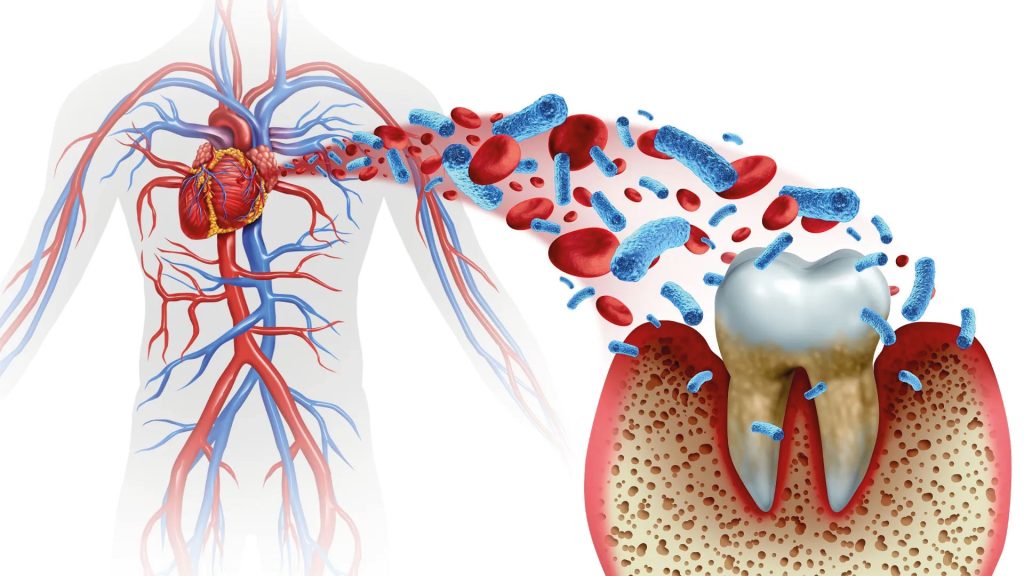
Here’s where it gets even more interesting. Your mouth isn’t a sealed environment. Every time you chew, brush your teeth, or even just go about your day, small amounts of bacteria from your mouth can enter your bloodstream through tiny cuts or inflamed areas in your gums.
When you have gum disease, your gums are essentially full of microscopic wounds, making it easier for oral bacteria to slip into your circulation. Once in your bloodstream, these bacteria can travel anywhere in your body—including to your heart and blood vessels.
Scientists have actually found oral bacteria in arterial plaque—the fatty deposits that build up in arteries and can lead to heart attacks and strokes. One particularly nasty culprit is Porphyromonas gingivalis, a bacteria strongly associated with gum disease, which has been detected in atherosclerotic plaques. While it’s still debated whether the bacteria directly contribute to plaque formation or are just along for the ride, their presence is telling.
The Plaque Connection (Both Kinds)
Here’s an interesting coincidence: both dental plaque and arterial plaque involve buildup that causes problems. Dental plaque is that sticky film of bacteria on your teeth that, if not removed, hardens into tartar and contributes to gum disease. Arterial plaque is the buildup of cholesterol, fats, and other substances in your blood vessel walls.
While they’re completely different substances, there may be a connection in how they develop. The chronic inflammation from gum disease might make it easier for arterial plaque to form and accumulate. It could also make existing plaques more unstable and prone to rupturing, which is what actually triggers most heart attacks.
Some researchers believe that the body’s inflammatory response to oral bacteria might prompt the liver to produce more C-reactive protein, a marker of inflammation that’s also associated with increased cardiovascular risk. Others think the bacteria themselves might directly damage the lining of blood vessels or contribute to blood clots.
It’s Not Just About Heart Attacks
The connection between oral health and cardiovascular disease goes beyond heart attacks. Studies have found associations between gum disease and:
Stroke: People with periodontal disease appear to have a higher risk of stroke, particularly ischemic strokes caused by blood clots.
Atherosclerosis: The hardening and narrowing of arteries seems to be more common and more severe in people with gum disease.
High blood pressure: Some research suggests that severe gum disease might be linked to higher blood pressure, and treating gum disease might help lower it.
Endocarditis: This serious infection of the heart’s inner lining can occur when bacteria from your mouth enter the bloodstream and attach to damaged areas of your heart.
What the Science Actually Says
Before you panic, it’s important to understand what these findings mean—and what they don’t mean.
The connection between gum disease and heart disease is what scientists call an “association,” not necessarily direct causation. Just because two things occur together doesn’t automatically mean one causes the other. It’s possible there’s a third factor influencing both, like smoking, diabetes, or genetic factors that make people susceptible to both conditions.
That said, the evidence is strong enough that major health organizations, including the American Heart Association, acknowledge the link and recommend that people take their gum health seriously as part of overall cardiovascular care.
Some intervention studies have shown promising results. When people with gum disease receive treatment—professional cleanings, improved home care, sometimes antibiotics—some show improvements in cardiovascular markers like inflammation levels and arterial function. That’s encouraging, even if we need more research to fully understand the relationship.
What You Can Do
The good news is that preventing and treating gum disease is largely within your control. Here’s what matters:
Maintain excellent oral hygiene. Brush twice daily with proper technique, floss every day, and don’t skip it even when you’re tired. These basics make a real difference.
See your dentist regularly for professional cleanings and checkups. Catching gum disease early makes it much easier to treat and reverse.
Don’t ignore warning signs. Red, swollen, or bleeding gums aren’t normal, even if they don’t hurt. Persistent bad breath can also be a sign of gum disease. Get these checked out.
Address risk factors. If you smoke, quit—it’s one of the biggest risk factors for gum disease. Manage conditions like diabetes that can make gum disease worse.
Tell your cardiologist about gum problems, and tell your dentist about heart issues. Both specialists should be aware of what’s going on with your overall health.
The Bigger Picture
This connection between gum health and heart health is part of a larger shift in how we think about health in general. Your body isn’t a collection of separate, unrelated systems—it’s all connected. What happens in your mouth doesn’t stay in your mouth, just like what happens in your gut affects your brain, and what happens in your heart affects your kidneys.
Taking care of your gums isn’t just about keeping your teeth or having fresh breath. It might genuinely be an investment in your cardiovascular health. And really, is there any downside to having healthier gums? You’ve got nothing to lose and potentially a lot to gain.
So maybe it’s time to take that floss out of the drawer and actually use it. Your heart might thank you for it.