Most of us have been brushing our teeth since we were kids, so it’s easy to assume we’ve got it down by now. But here’s the uncomfortable truth: a lot of people are doing it wrong. Maybe you’re brushing too hard, or not long enough, or skipping crucial areas. Small mistakes in your daily routine can add up over time, potentially leading to cavities, gum disease, and other issues that could have been prevented.
The good news? It’s never too late to refine your technique. Let’s walk through what a truly effective oral hygiene routine looks like, step by step.
Start with the Right Tools
Before we even get to technique, you need the right equipment. Not all toothbrushes are created equal.
Choose a soft-bristled brush. I know the firm bristles might seem like they’d clean better, but they can actually damage your gums and wear down your enamel over time. Soft bristles are gentler and just as effective when used properly. Most dentists recommend soft bristles for this exact reason.
Consider an electric toothbrush. While a manual brush works fine if you use proper technique, electric toothbrushes can make it easier to clean thoroughly. Many models have built-in timers to ensure you brush for the full two minutes, and some even have pressure sensors that alert you if you’re brushing too hard.
Use fluoride toothpaste. Unless you have a specific reason to avoid it, fluoride toothpaste is your best bet for preventing cavities. It helps strengthen enamel and can even reverse early signs of tooth decay.
The Two-Minute Rule (and Why It Matters)
Two minutes might not sound like much, but when you’re actually standing there brushing, it can feel like forever. Time yourself once, and you’ll probably be surprised at how long two minutes actually is.
Why two minutes? Because that’s roughly how long it takes to thoroughly clean all the surfaces of your teeth when you’re doing it properly. Most people brush for about 45 seconds and call it good enough. That’s not cutting it.
Set a timer on your phone, use an electric toothbrush with a built-in timer, or play a two-minute song. Whatever works for you. The point is to actually brush for the full duration, not just go through the motions.
The Proper Brushing Technique
Here’s where most people’s technique falls apart. The goal isn’t to scrub your teeth like you’re cleaning tile grout. It’s about gentle, thorough cleaning at the right angle.
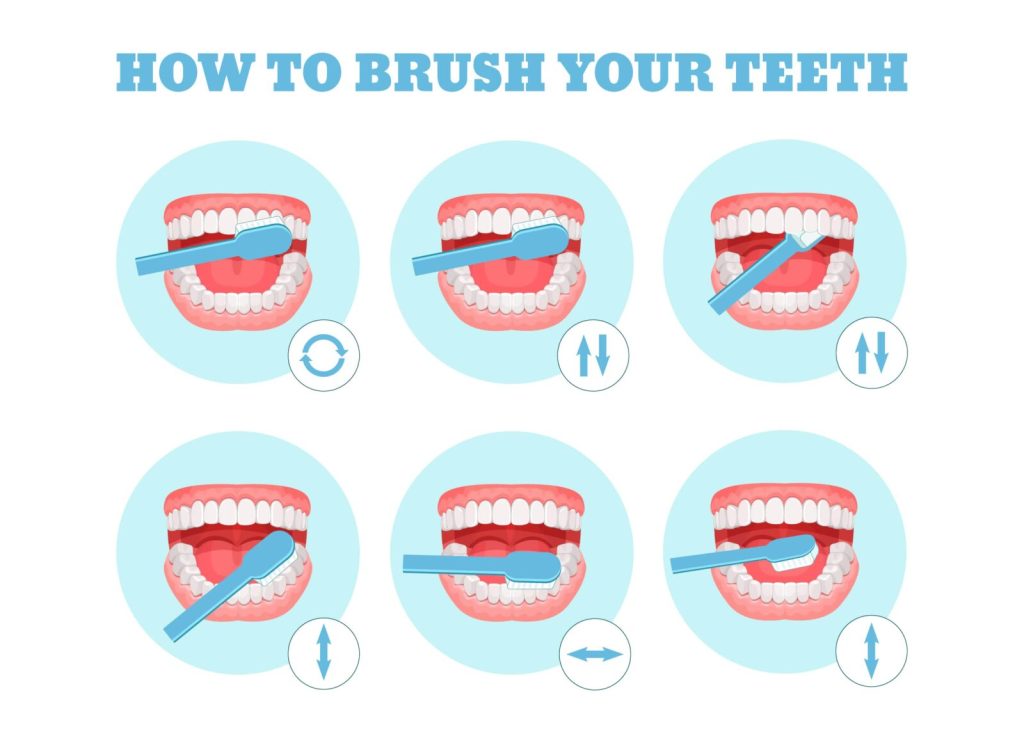
Hold your brush at a 45-degree angle to your gum line. This allows the bristles to clean both your teeth and the area where your teeth meet your gums—a crucial spot where plaque loves to accumulate.
Use gentle, circular motions. Think of it as massaging your teeth and gums rather than scrubbing them. Move the brush in small circles, covering one or two teeth at a time. Avoid harsh back-and-forth sawing motions, which can irritate your gums and wear down enamel.
Follow a pattern to make sure you don’t miss anything. Start with the outer surfaces of your upper teeth, moving from one side of your mouth to the other. Then do the same for your lower teeth. Next, clean the inner surfaces the same way. Finally, brush the chewing surfaces of your teeth using short back-and-forth strokes.
Don’t forget the backs of your front teeth. This is one of the most commonly missed areas. Tilt your brush vertically and use gentle up-and-down strokes to clean the inside surfaces of your front teeth, both top and bottom.
Brush your tongue. Your tongue harbors tons of bacteria that can cause bad breath and affect your oral health. Gently brush from back to front, or use a tongue scraper if you prefer.
Flossing: The Step You’re Probably Skipping
Let’s be honest—most people don’t floss daily. Some don’t floss at all. But here’s the thing: brushing alone only cleans about 60% of your tooth surfaces. The other 40% is between your teeth, where your toothbrush can’t reach.
Floss at least once a day, preferably before bed. It doesn’t matter whether you floss before or after brushing, as long as you do it.
Use about 18 inches of floss, winding most of it around your middle fingers and leaving a couple inches to work with. This lets you use a fresh section for each tooth.
Curve the floss into a C-shape around each tooth and gently slide it up and down, going slightly below the gum line. Don’t just snap it between your teeth and pull it back out—that’s not accomplishing much.
Be gentle but thorough. If your gums bleed a little when you first start flossing regularly, that’s often a sign of inflammation from not flossing enough. The bleeding should decrease as you continue flossing daily and your gum health improves. If it persists after a week or two, talk to your dentist.
Mouthwash: Optional but Helpful
Mouthwash isn’t strictly necessary if you’re brushing and flossing properly, but it can provide an extra layer of protection.
Look for a mouthwash with fluoride for cavity protection, or one specifically designed for gum health if that’s a concern for you. Avoid alcohol-based mouthwashes if you have dry mouth, as they can make the problem worse.
Use mouthwash after brushing and flossing, and don’t rinse with water afterward—let the active ingredients do their work.
Timing Is Everything
Brush twice a day: morning and night. Morning brushing removes the bacteria that built up overnight. Evening brushing clears away all the food debris and bacteria from the day.
Wait 30 minutes after eating before brushing, especially if you’ve consumed something acidic like citrus fruits, soda, or wine. Acid temporarily softens your enamel, and brushing immediately can actually cause damage. Rinse with water instead, then brush later.
Don’t Forget the Basics
Replace your toothbrush every three to four months, or sooner if the bristles are frayed. Worn bristles don’t clean effectively.
See your dentist regularly for professional cleanings and checkups, typically every six months. Even perfect home care can’t replace what a dental hygienist can do with professional tools.
The Bottom Line
Getting your oral hygiene routine right isn’t complicated, but it does require attention to detail and consistency. The few extra minutes you spend doing it properly can save you hours in the dental chair and potentially thousands of dollars in treatments down the road.
Your mouth will thank you for it—and so will your wallet.