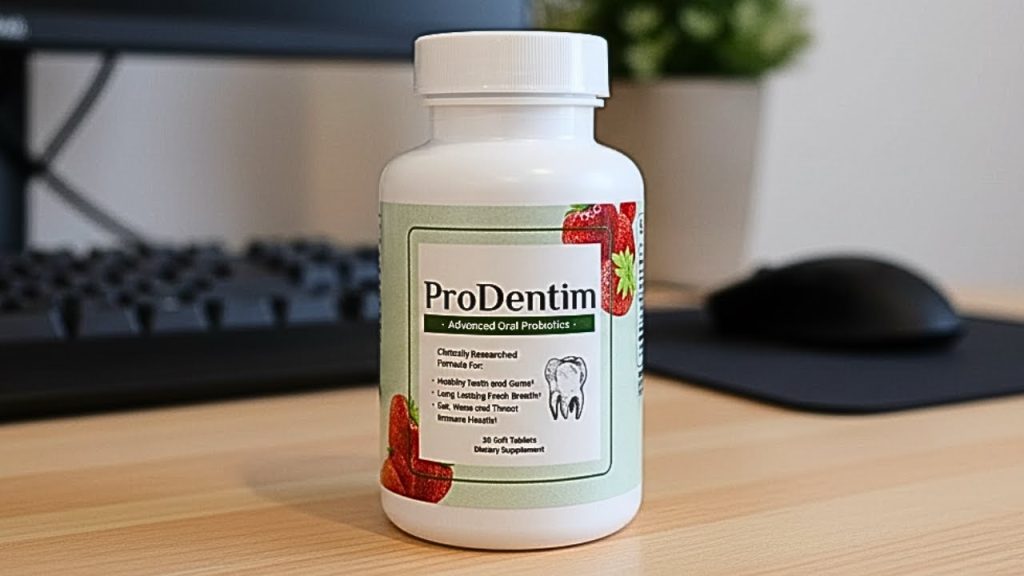
ProDentim has been making waves in the oral health supplement space lately. It’s marketed as a probiotic candy that supposedly helps your teeth and gums by balancing the bacteria in your mouth. Sounds pretty straightforward, right? But like with most supplements, there’s more to unpack here.
I’m going to be upfront with you: while there’s some research suggesting certain probiotic strains might help oral health, the science isn’t rock-solid yet. Results seem to vary quite a bit from person to person. And here’s something important—ProDentim isn’t a medical treatment. It won’t cure dental problems, and you really should talk to your dentist or doctor before adding it to your routine.
Let’s dig into what this product actually is and whether it’s worth your money.
What Is ProDentim?
ProDentim is basically a chewable supplement designed to improve oral health using probiotics. The tablets are soft candies that dissolve in your mouth, releasing what the company calls “beneficial bacteria” along with some nutrients. According to their official websites, each tablet contains 3.5 billion probiotic strains mixed with natural ingredients like inulin and malic acid.
The whole pitch is that regular toothpaste and mouthwash might actually be killing off good bacteria in your mouth, not just the bad stuff. ProDentim claims to repopulate your mouth with the good guys to help with things like bad breath, gum inflammation, and sensitive teeth.
You get 30 tablets per bottle, and they typically run about $49-$69 depending on whether you buy in bulk. They offer a 60-day money-back guarantee, which is something. The product is made in the USA in FDA-registered facilities, though keep in mind that as a dietary supplement, it’s not FDA-approved for treating anything specific. That’s just how supplements work in general.
The Oral Microbiome: Why It Matters
Here’s something wild: your mouth contains over 700 different species of bacteria. We’re talking billions of individual microbes living in there, which makes it the second most diverse bacterial ecosystem in your body after your gut.
Not all these bacteria are bad. In fact, many of them are incredibly helpful—they maintain pH balance, fight off the actually harmful bacteria, and support your immune system. The problem is when this balance gets disrupted. That’s when you can end up with tooth decay, gum disease, and chronic bad breath.
Research is increasingly showing just how crucial this balance is. A 2021 study in Frontiers in Dental Medicine found that probiotics can help modulate the bacteria in your mouth, potentially reducing inflammation in conditions like gingivitis and periodontitis. When things get out of whack (scientists call this “dysbiosis”), it can be caused by everything from eating too much sugar to using overly harsh dental products.
What’s really interesting—and a bit unsettling—is that Healthline notes these oral bacteria don’t just stay in your mouth. They can actually travel to other parts of your body and potentially affect things like brain health through inflammation or infection pathways.
An article from Ask the Dentist goes even further, explaining that your oral microbiome influences your gut health, immune system, cardiovascular health, and even the gut-brain axis. Bacteria from your mouth can actually seed your gut, contributing to conditions like inflammatory bowel disease. There’s even research linking certain oral pathogens like Porphyromonas gingivalis to Alzheimer’s disease. Pretty wild stuff.
This is why maintaining balance matters, and it’s where probiotics come into the picture—though the evidence is still developing.
Ingredients in ProDentim and Their Roles
ProDentim’s formula centers around probiotics plus a few supporting ingredients. Let me break down each one honestly, based on what the research actually says. Just remember that while some of these ingredients have decent research behind them individually, there aren’t many studies on ProDentim as a complete product.
Lactobacillus Paracasei: This probiotic strain might help your gums by reducing harmful bacteria like Streptococcus mutans, which is one of the main culprits behind tooth decay. A 2014 study from NutraIngredients found that L. paracasei NTU 101 reduced S. mutans levels and cavities in rats. A Medium article discusses how these probiotics can compete with the bad bacteria, though it’s not a complete solution by itself. SelfDecode Supplements notes it may reduce cavity-causing bacteria in adults, but results in children are less consistent.
Lactobacillus Reuteri: This one’s known for anti-inflammatory properties and may help with gum inflammation. A 2019 study in NutraIngredients-Latam showed that both live and dead L. reuteri reduced Porphyromonas gingivalis (a major gum disease pathogen) by up to 86% and improved survival rates in infection models. The 2021 Frontiers review confirms that strains like DSM 17938 can reduce gum inflammation in periodontitis when combined with regular dental cleaning, though results vary.
B.lactis BL-04: This strain may help balance mouth bacteria and support immune health. The Frontiers review mentions that Bifidobacterium strains like B. lactis HN019 improved pocket depth and attachment in periodontitis patients, but the evidence for using it alone is mixed.
Inulin: A prebiotic fiber that feeds good bacteria. While it’s well-studied for gut health, the research specific to oral health is pretty limited. The theory is that what works in your gut might work in your mouth too, but we need more studies to confirm this.
Malic Acid: Supposedly helps keep teeth white. It’s derived from strawberries, and a 2018 Frontiers in Microbiology study discusses its potential for pH balance in dental care, but the whitening claims aren’t really backed up by solid evidence.
Tricalcium Phosphate: This supports tooth health by helping with remineralization. Livestrong notes that similar compounds like dicalcium phosphate are used in toothpaste for remineralization, but evidence for it in supplement form is pretty general.
Peppermint: Provides anti-inflammatory effects and freshens breath. This is pretty much common knowledge in oral care, though specific studies on inflammation are limited in what I’ve seen.
The bottom line? These are natural ingredients, but their combined effects in ProDentim specifically haven’t been studied much. Most of the claimed benefits are extrapolated from general probiotic research.
How ProDentim Works
The concept is straightforward: ProDentim tries to restore balance to your oral microbiome by introducing beneficial bacteria. The company’s argument is that many common dental products contain harsh chemicals that disrupt this balance, which can lead to problems like bad breath or gum issues.
When the candy dissolves in your mouth, it releases probiotics that are supposed to compete with harmful bacteria, potentially reducing acid production and inflammation.
A 2021 Nature Outlook article discusses how the diversity of your oral microbiome is linked to overall health, and when that diversity gets disrupted, it can lead to bigger problems. Studies on L. paracasei, for instance, show it can prevent S. mutans from sticking to your teeth. But this isn’t a magic bullet—your oral health still depends heavily on your diet, how well you brush and floss, and your genetics. Think of probiotics as a potential helper, not a replacement for basic dental hygiene.
Potential Benefits
Based on research into the individual ingredients, here’s what ProDentim might do for you. But keep in mind this evidence is preliminary and not specific to the product itself:
Improved Oral Microbiome Balance: Probiotics like L. reuteri and B. lactis may reduce harmful bacteria, which could lower gum inflammation. The Frontiers review found that probiotics used alongside regular dental cleaning reduced pocket depth in periodontitis patients.
Reduced Tooth Decay Risk: L. paracasei may inhibit S. mutans, at least according to studies done on rats.
Fresher Breath and Whiter Teeth: Peppermint and malic acid might help with this, but honestly, the effects are probably pretty mild.
General Wellness: Some of these strains support immunity or digestion, but when you’re taking them orally like this, the systemic effects are limited.
Here’s the honest truth though: benefits aren’t universal. A 2020 study in the Journal of Applied Medical Sciences on probiotics for cavities showed mixed results. Plenty of users report no change at all, and we really need more long-term studies.
Possible Side Effects and Consequences
ProDentim is generally considered safe as a supplement, but there are some potential downsides to be aware of:
Mild Digestive Upset: Probiotics can sometimes cause bloating or gas when you first start taking them, though this is pretty rare with oral forms.
Allergic Reactions: Some people might react to ingredients like peppermint or inulin (which comes from chicory root).
Interactions: Probiotics may affect how well antibiotics work or interact with immunosuppressants. If you’re on any medication, definitely talk to your doctor first.
Ineffectiveness: Not everyone sees results. Some studies show no significant reduction in plaque or cavities at all.
Consequences of Imbalance: It’s unlikely, but there’s a chance probiotics could disrupt your microbiome rather than help it. Keep an eye out for any negative changes.
Financial/Expectation Risk: At $49-69 per bottle, this isn’t cheap. If it doesn’t work for you, that’s money down the drain. They do offer refunds, but the process can be a hassle.
No serious side effects have been reported in studies, but if you’re pregnant, nursing, or have any health conditions, you should avoid this without medical advice. And as with any supplement, start with a small dose to see how you react.
Scientific Evidence and Studies
ProDentim’s claims draw from broader probiotic research rather than studies on the product itself:
-
- Healthline has discussed how oral bacteria can affect brain health through inflammation, which underscores why the microbiome matters.
-
- Ask the Dentist explains how diet and hygiene habits disrupt the oral microbiome, with probiotics potentially offering support.
-
- Experience Life has warned about toxins in conventional toothpaste affecting the microbiome.
-
- The 2021 Frontiers in Dental Medicine review on probiotics for gingivitis and periodontitis shows mixed but promising results for strains like L. reuteri.
-
- NutraIngredients studies from 2014 and 2019 on L. paracasei and L. reuteri demonstrate reductions in harmful bacteria and inflammation.
-
- Other sources like SelfDecode and Medium support the idea that probiotics can help prevent decay, but they emphasize these are meant to complement other efforts, not replace them.
The evidence is encouraging for probiotics in oral health generally, but most of it comes from small studies. We really need large-scale clinical trials specifically on ProDentim to know for sure what it can do.
User Reviews and Real Experiences
The feedback on ProDentim is all over the place. On the positive side, some people rave about improved breath and gum comfort after a few weeks of use, with a handful mentioning whiter teeth. On the flip side, plenty of users report no noticeable changes at all, complain about the cost, and occasionally mention mild digestive issues.
There are also scam complaints, mostly centered on unauthorized charges or people buying fake products from unofficial websites. Average ratings seem to hover around 3.5 to 4 out of 5 stars, but take that with a grain of salt since many reviews are on affiliate sites. The real users who seem to get results emphasize being consistent with it and combining it with good dental hygiene habits.
Conclusion
ProDentim offers an interesting take on oral health by using probiotics, and the ingredients do have some research backing them for microbiome balance and reduced inflammation. There’s a chance it could help with gum support and reducing harmful bacteria, but the evidence is limited and it’s definitely not a substitute for seeing your dentist.
Side effects are rare but possible, and there’s a real risk of just wasting your money if it doesn’t work for you. If you’re thinking about trying it, start small, talk to your dentist first, and make sure you buy from the official website to avoid fakes.
At the end of the day, the foundation of good oral health is still a healthy diet, proper brushing and flossing, and regular dental checkups. Supplements like ProDentim might give you a little extra help, but they’re not miracle workers.